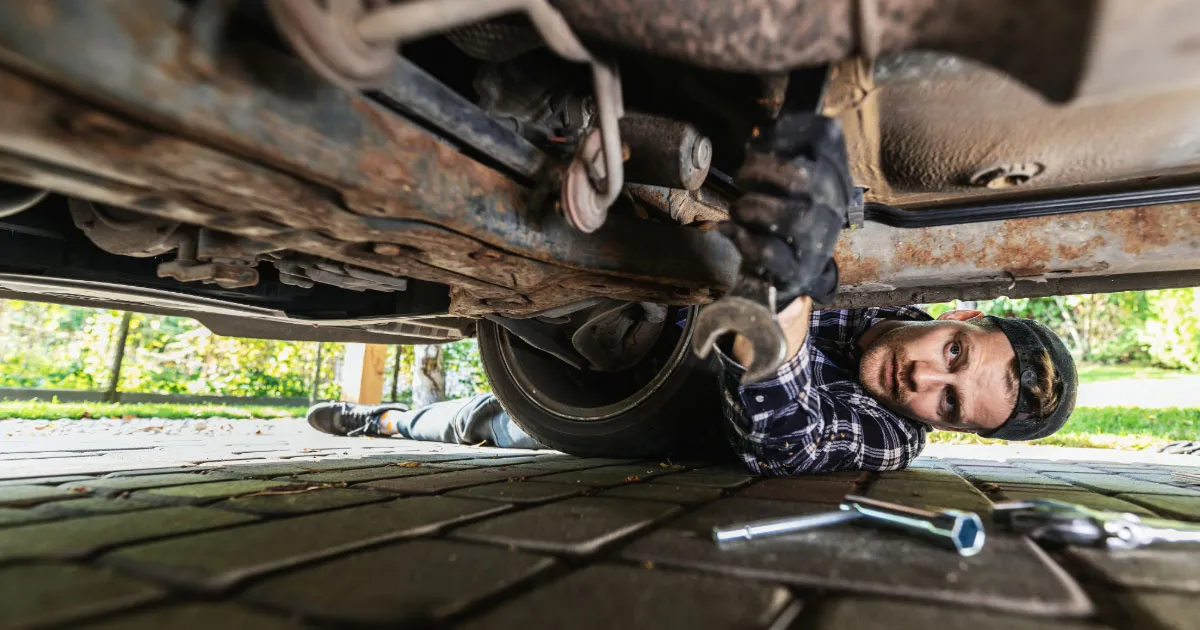
Rust may not be the first concern of drivers in Washington, D.C., but the region fosters a particularly corrosion-friendly environment.
In D.C., you get a combination of rainy weather, winter road treatments, freeze-thaw cycles, and an aging fleet of cars, which creates an ideal situation for rust to appear underneath a car before it actually shows on the metal surface outside.

S&P Global Mobility reported that Washington, D.C. is among the areas where the average vehicle age has been increasing faster than the national trend. The average age of vehicles across the entire country in 2025 is 12.8 years.
Thus, for people who would want to own their vehicles longer than ten years, rust becomes a technological problem, not just a cosmetic problem.
Why D.C. Creates a Rust-Friendly Environment
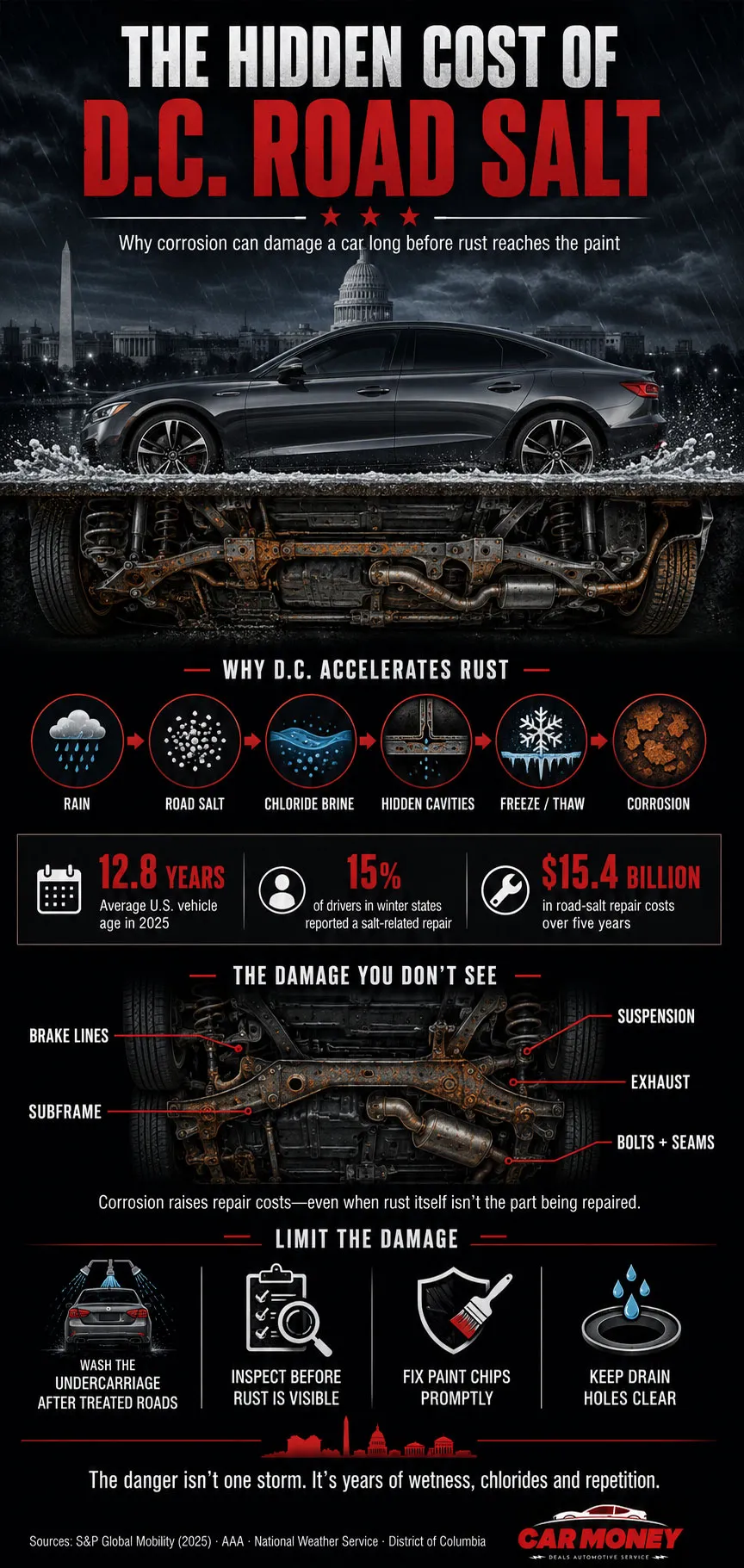
Rust is an electrochemical process that requires iron, oxygen and moisture. The use of road salt speeds the process since the chloride dissolved in water forms a highly conductive electrolyte on the exposed steel surface.
Washington has precipitation nearly year-round, meaning vehicles get wet often instead of being dry for long periods of time as is the case for many areas in the western United States. Winter makes the situation worse.
Agencies responsible for transport in the region are using road salt or anti-icing liquids for keeping roads in service during snowfalls, freezing rains, and icy weather conditions. The methods based on chloride are good for road safety, but it is highly corrosive at the same time.
The harmful process persists long after the snowstorm has hit. The salt from the snow mixes with the mud and water and collects in the wheels and suspension components, cracks and cavities under the vehicle.
When the temperatures rise above zero degrees, the residue starts to take action. And once the temperatures drop again, the wet-dry and freeze-thaw cycle repeats itself.
In Washington, D.C., rust may be a major problem for owners of cars although the problem may not be very obvious due to such factors, as moisture, salt used for roads, cycles of freezing and thawing, and old cars. If vehicles remain unprotected from corrosion, the consequences can be far-reaching in terms of repair costs, resale value, and lifespan of the vehicle.
The Damage Owners Often Cannot See
In general, modern vehicles have much better factory anti-corrosion protection than cars made several decades ago, reducing the risk of serious body rust. This does not mean that corrosion has been eliminated.
In most cases, the more dangerous corrosion takes place in other, less visible parts of a vehicle. For example, salt water can happen to reach subframes, brake components, fuel and hydraulic lines and other parts located under a car.
Once the protective coatings are damaged, the metal underneath becomes exposed and is very likely to corrode.
It is important to pay extra attention to brake lines where corrosion may affect the structure of brake lines. Exhaust parts can suffer from holes or broken connections.
Rusty bolts can turn normal repairs into more costly ones, as extra effort will be needed by specialists to get a stuck part of hardware out and replace the nearby parts.
Corrosion can therefore increase ownership costs even when rust itself is not the part being repaired.
Older D.C. Cars Face Disproportionate Risk
The age of the vehicles has made the problem particularly pertinent at home. Vehicles that have undergone several winters, have travelled over potholes, have gone through road rubbish, and have experienced extreme weather patterns (temperature changes, moisture, etc) for over ten years can face increasing corrosion exposure.
The average age of vehicles across the nation is noted to be around 12.8 years as of 2025. This is an increase noted, as the amount of time, that Americans keep their vehicles increases.
However passenger vehicles turn out to be older. Economically, long-lasting vehicles are desirable as they are still mechanically sound; however, rust protection may not last as long as engines or transmissions.
Coating gets scratched. Drain hole blocks.
Shield made from plastic is is coming loose. In the aftermath of past repairs, metal may not be thoroughly protected as it would be from the manufacturer.
The vehicle which appeared to have less than seven year’s worth of rust may have some rust after 14 and 15 years.
Rust Can Become a Four-Figure Problem
Research on this topic done by the American Automobile Association teaches us just how big the problem is. Drivers in winter states have reported that about 15% of them had a road salt related repair done in the past five years, resulting in a total of $15.4 billion in salt repair expenses during this time.
The cumulative damage is the worst threat of all. In case of having a rusted exhaust part, replacing it is not that big of a thing.
But when a vehicle combines worn brake hoses with rusty suspension parts as well as corroded exhaust parts, then it becomes too problematic in terms of finance.
Rust also matters at resale. Significant underbody corrosion can reduce buyer confidence, complicate inspections and make dealerships or private buyers discount vehicles that otherwise run well.
How D.C. Owners Can Limit the Damage
The best way of delegating contaminants from the surface of a vehicle is to wash them away before they get the chance to remain on it for some periods. Winter months make undercarriage washing an especially efficient process after getting exposure to a treated road, particularly when the temperatures are favorable for undercarriage washing.
The vehicle owners should inspect their cars regularly without waiting for any visible rust. While inspecting the cars, they must check the places such as the subframes, the seams of the rocker panel, the wheels, the brake lines, and the fixtures for the suspension system.

Any dent in paint should be fixed immediately and drainage holes must be kept clear.
If you drive a car in Washington D.C., the chances of corrosion ruining it within a day are extremely low. Its real danger is more subtle: years of constant wetness and exposure to chlorides build up the price of car repairs and cut down on the effective life of the already aging fleet of automobiles.