Indeed-but what is necessary is sensible and not panicking. Washington, D.C. is still a very dangerous place regarding auto thefts, although the situation got much better.
According to the statistics of the Metropolitan Police Department dated August 13, 2026, there were 1,391 car thefts committed in the city, which is 53% less than 2,931 cases in the corresponding period of 2025.

The number of thefts from automobiles was reduced by 37%, from 3,770 cases in 2025 to 2,391 in 2026.
These reductions are considerable, but there are still about 6 stolen cars and over 10 thefts from cars every day.
Car thefts in Washington, D.C., have decreased significantly; nevertheless, car owners in the District should remain vigilant as the rate of thefts is still relatively high. Read on to learn about the most at-risk vehicles, the rules regarding car theft insurance and which preventive measures offer the best protection.

D.C.’s Risk Is Falling From an Unusually High Peak
The recent improvement is not enough to interpret in itself. The District of Columbia registered 3945 motor-vehicle thefts in 2025, which makes a 23% drop compared to 5134 in 2024.
In 2024, however, D.C. still had the highest rate of auto theft in the U.S. with 842.4 thefts per 100,000 residents, which is more than three times the national average of 250.2.
During the first half of the year 2025, Washington, D.C., was seen having a theft rate of about 373 crimes in relation to 100,000 people of the population.
Since then, things have improved at a much greater pace than in total in the country, with a drop in vehicle theft about 53% by August 13, 2026 and a drop in vehicle theft about 23% during 2025. To practically conclude, the current risk is much lower than in the 2023-2024 spike period but Washington, D.C. is not officially a low-theft place.
Theft, Break-Ins and Carjacking Are Different Risks
Motor vehicle theft, theft from automobile, and car-jacking are terms often confused with each other. The term “motor vehicle theft” means that the car alone was taken without its owner being present.
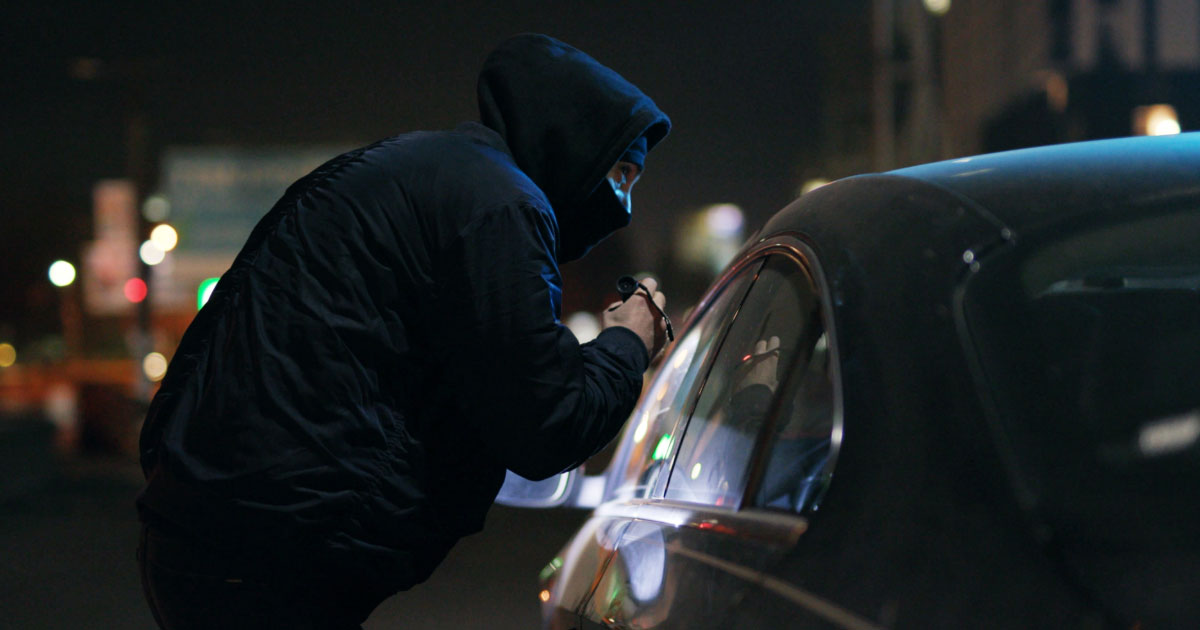
The term “theft from automobile” relates to the car in terms of the objects that have been taken from it and usually occurs while the window is broken. The term “carjacking” means robbery in terms of taking possession of the car while it is occupied.
The changes are evident. According to reports, carjackings in Washington D.C. decreased by 63% in the first half of 2026 compared to the same period in 2025.
However, studies show that the probability of a car being stolen is still very low for the single driver. Regardless of this, car thefts still represent much larger risk on the personal level.
Crimes occur in many various places like gas stations, parking lots, driveways, intersections and all places where the person is arrested or leaves the vehicle. In emergencies one should leave their vehicle.
The vehicle, phone or bag is not worth making trouble.
Some Vehicles Face Disproportionate Exposure
Risks are not the same in all places. After a cheap theft method became popular on the internet, many Hyundai and Kia cars without strong engine locks were victims of this theft style.
More than 8,100 Hyundai and Kia cars considered to be vulnerable received a chance to get free ignition lock protection through a 2025 settlement achieved in several states.
The leading vehicle model stolen in 2025 on a national level was the Hyundai Elantra, followed by the Honda Accord and Hyundai Sonata. The thieves also targeted pickup vehicles and many common Honda, Toyota and Kia models.
Even if the most advanced automobile doesn’t start anymore, thieves would not hesitate trying to break in, causing serious damages to the steering column, window or ignition system.
The Financial Damage Extends Beyond the Car
Even when police find the vehicle, car theft can create problems for its owner. This can involve costs related to towing and storing the vehicle, damage to the locks and electronic systems, the interior being messed up or the vehicle having mechanical problems and being inoperable for a long period.
However, although comprehensive auto insurance typically has theft and damage coverage to stolen vehicles, there may also be deductibles and coverage limits. Liability-only auto insurance, on the other hand, does not cover stolen cars.
Usually, payment of a claim is done with actual cash value rather than the amount it would cost to buy an equivalent replacement. Owners who owe more than the actual value of their vehicle may want gap coverage.
The theft of items in the car is usually covered by renters or homeowners insurance and does not fall under the auto insurance policy and is likely to be subject to a different deductible.
The Most Effective Response Is Layered Prevention
Be sure to keep all windows, doors locked and take the car keys with you before leaving your car parked unattended, even if you’re only stepping away from the vehicle for a couple of minutes. Make sure that your vehicle is always monitored and doesn’t leave it running without anyone being inside.
Choose safe, brightly-lit places to park the car. If it is possible, use a locked car garage.

It is sensible to combine the factory alarm with a visible steering wheel lock and possibly an immobilizer or kill switch installed by a qualified technician. Using a hidden tracker may help in recovering the car, but you should rather give the tracker information to the police, not pursue the tracked car on your own.
Make sure to take pictures of your car, including the license plate and VIN number, ensure that you have sufficient comprehensive coverage and rental reimbursement, and quickly advise law enforcement and your insurance company if your car is stolen. However, in Washington these legitimate fears can be alleviated with proper planning.